
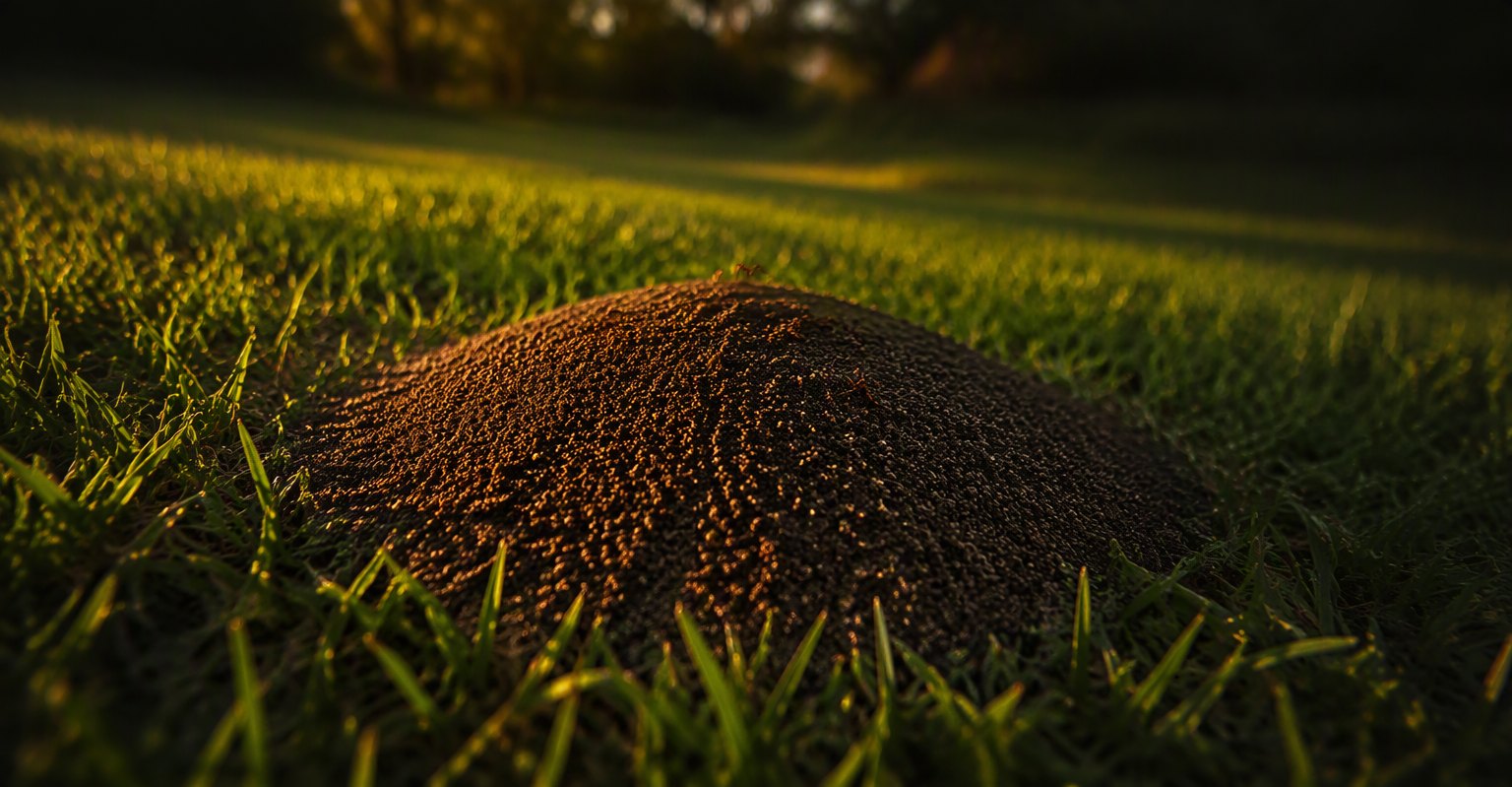
You mowed on Saturday. Tuesday morning there’s a fresh mound the size of a dinner plate by the mailbox. It didn’t move in overnight — it surfaced. The colony was there all along, and the rain just gave it a reason to build a new chimney. Welcome to fire ant country, where the sandy soil is the subdivision.
The mound is not the colony
This is the fact that makes fire ants beat most DIY efforts: the visible mound is a ventilation structure, not the house. The colony — queens, brood, and workers — runs feet deep and yards wide through tunnels you’ll never see. Stomping, kicking, or shoveling a mound scatters workers and occasionally splits the colony into multiple nests. It feels decisive. It is the opposite.
What actually collapses a colony
Bait. Fire ant workers forage widely, carry food home, and share it through the colony — a slow-acting bait rides that behavior straight to the queens. Broadcast across the whole yard at the right season, it treats colonies you haven’t even found yet. Individual mound treatments handle the active hot spots. The combination — bait the yard, treat the mounds — is the one-two that actually empties a lawn, and it takes one to two weeks, not one afternoon.
Timing in this climate
Fire ants forage hardest in warm, dry windows — late spring and early fall are the prime baiting seasons here, and bait applied right before rain is bait wasted. Mid-summer colonies run deep during the heat and rebuild after every storm. A yard on a real program gets the seasonal rhythm: broadcast bait, mound treatments as needed, and a re-check before the season turns. That rhythm is exactly what the ant service runs.
Stings, kids, and dogs
For most people a fire ant sting is a painful welt that itches for days. For a small number — and you often don’t know until the day it matters — stings trigger a serious reaction. Mounds near play equipment, the mailbox run, and the dog’s patrol route aren’t cosmetic problems; they’re the priority list. Flag them, keep bare feet off them, and treat them first.